
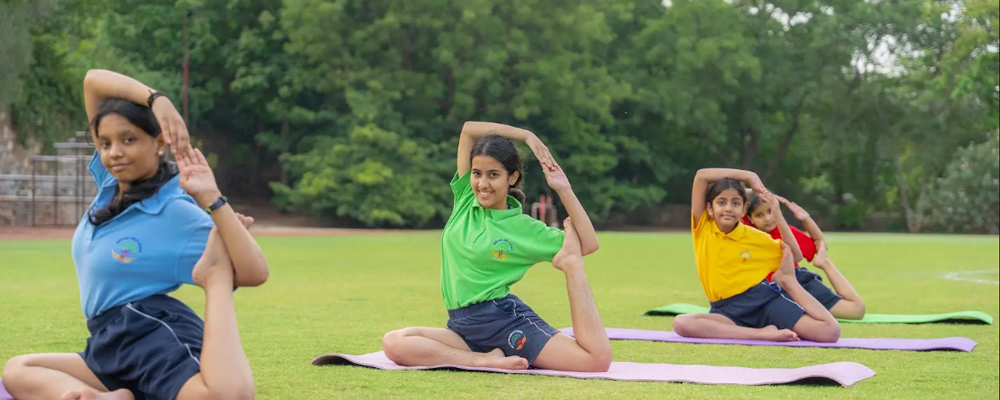
A sporting activity appears simple from the outside. A student runs towards a finish line, passes a ball to a teammate or attempts to perfect a difficult yoga pose. Yet, beneath these movements lies a combination of decision-making, emotional regulation, communication, perseverance and self-awareness. Every attempt offers a chance to learn something about the body, the mind and the people around us.
This is why sports and physical activities are an important part of education. They support more than physical fitness; they contribute to the development of students as confident, capable and socially responsible individuals.
Holistic development recognises that education should nurture the whole student, including physical health, intellectual abilities, emotional well-being, social skills and personal values. Academic learning remains essential, but it is only one part of preparing young people for the challenges of life.
From team sports and athletics to dance, swimming, yoga and outdoor activities, movement creates opportunities for learning that extend beyond the classroom. So, how exactly do sports and physical activities support holistic development in students?
Let us explore the different ways in which an active school life can shape growing minds and personalities.
What Is Holistic Development in Students?
Holistic development is an approach to education that considers the different dimensions of a student’s growth rather than measuring progress through academic achievement alone.
A student may perform exceptionally well in examinations but struggle to manage stress, work collaboratively or recover from setbacks. Another may be naturally confident in social situations but may need support with concentration, discipline or physical health. These differences highlight why students need opportunities to develop a broad range of abilities.
Holistic development brings together several interconnected areas:
- Physical development: Building strength, stamina, flexibility, coordination and healthy lifestyle habits.
- Intellectual development: Strengthening concentration, memory, critical thinking, creativity and problem-solving.
- Emotional development: Learning to understand feelings, regulate reactions, develop confidence and cope with disappointment.
- Social development: Practising communication, cooperation, empathy, respect and conflict resolution.
- Moral development: Understanding fairness, responsibility, honesty and accountability.
- Personal development: Becoming more independent, adaptable, disciplined and aware of individual strengths and limitations.
These dimensions do not develop in isolation. For example, a student who learns to remain calm during a competitive match may also find it easier to manage frustration during a difficult classroom assignment. Similarly, a student who learns to cooperate with teammates may become more comfortable participating in group projects.
Sports provide a practical environment in which these abilities can be explored, tested and gradually strengthened.
1. Building Physical Health and Fitness
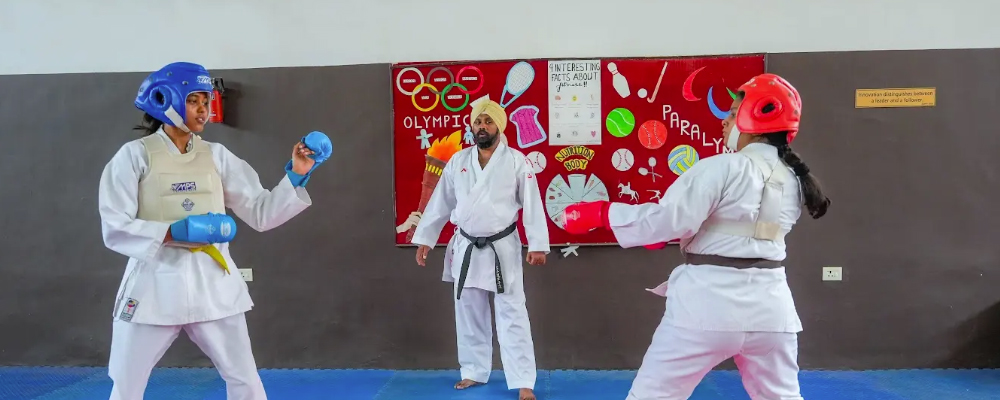
The most visible benefit of sports and physical activity is their contribution to physical health. During childhood and adolescence, the body undergoes significant changes, making regular movement particularly important.
Activities such as running, cycling, swimming, football, basketball and badminton engage different muscle groups and help improve cardiovascular fitness, muscular strength, endurance and coordination. Exercises involving stretching, balance and controlled movement can also support flexibility, mobility and body awareness.
Regular physical activity helps students develop fundamental movement skills, including running, jumping, throwing, catching and balancing. These skills form the foundation for participating in a wider variety of sports and recreational activities as they grow older.
However, the benefits extend beyond performance on a sports field. Establishing active habits during school years can help students understand the importance of looking after their bodies throughout their lives.
Consider a student who initially struggles to complete a short run without becoming tired. With appropriate training, rest and consistent practice, the student may gradually notice improvements in stamina. This progress can encourage them to remain active and appreciate the connection between effort and physical improvement.
Sports can also help students develop a healthier relationship with their bodies. Instead of judging themselves solely by appearance, they can begin to recognise what their bodies can do: run a little further, maintain balance for longer or perform a movement with greater control.
It is important, however, that physical education is suited to students’ ages, abilities and health needs. Exercise should be safe, enjoyable and appropriately supervised, with sufficient recovery time. The aim is not to push every student towards competitive athletic performance, but to help each one build the skills and confidence needed for an active life.
2. Supporting Mental Health and Emotional Well-being
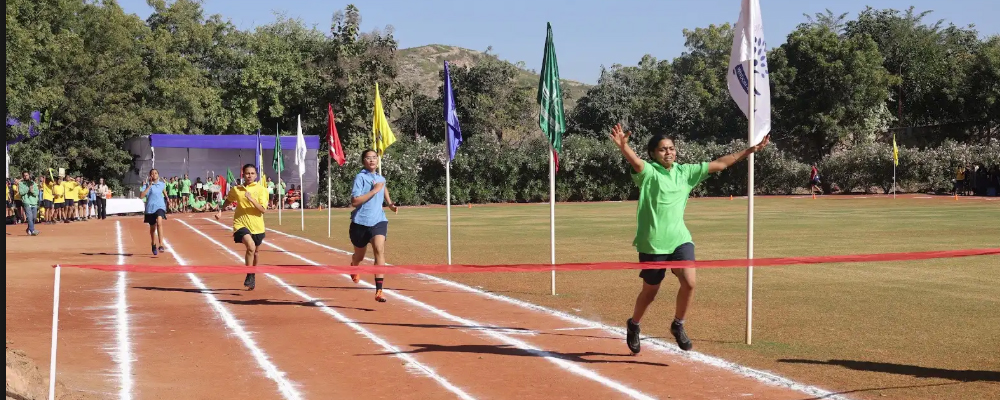
School life can involve academic pressure, changing friendships, personal expectations and fear of uncertainty about the future. Although these experiences are a normal part of growing up, students need healthy ways to cope up with the emotions associated with them.
Physical activity can offer a valuable outlet. Movement provides a break from prolonged periods of sitting and studying, allowing students to redirect their attention and return to their responsibilities with a different perspective.
Research has associated regular physical activity with better psychological well-being, improved mood and lower symptoms of anxiety and depression. While exercise is not a substitute for professional mental health support when it is needed, it can form a useful part of a balanced approach to student well-being.
Sports also give students opportunities to experience and understand a wide range of emotions. The excitement of scoring a goal, the nervousness before a competition, the disappointment of losing and the satisfaction of mastering a difficult skill are all part of participation.
Learning to navigate these emotions can be just as important as the activity itself.
For instance, a student who misses a penalty in a football match may initially feel embarrassed or disappointed. With encouragement from a coach and teammates, the student can learn to acknowledge the mistake, understand what went wrong and prepare for the next opportunity. Over time, this process can strengthen emotional resilience.
Physical activities such as yoga, stretching and mindful movement may also help students practise breathing, patience and awareness of the present moment.
In a boarding-school environment, where students share daily routines and spend considerable time with peers, opportunities for movement can provide a constructive change of pace between academic responsibilities and personal time.
The essential lesson is that emotional strength does not mean never feeling disappointed or anxious. It means gradually learning how to recognise these feelings and respond to them in healthy, constructive ways.
3. Improving Concentration, Memory and Cognitive Skills
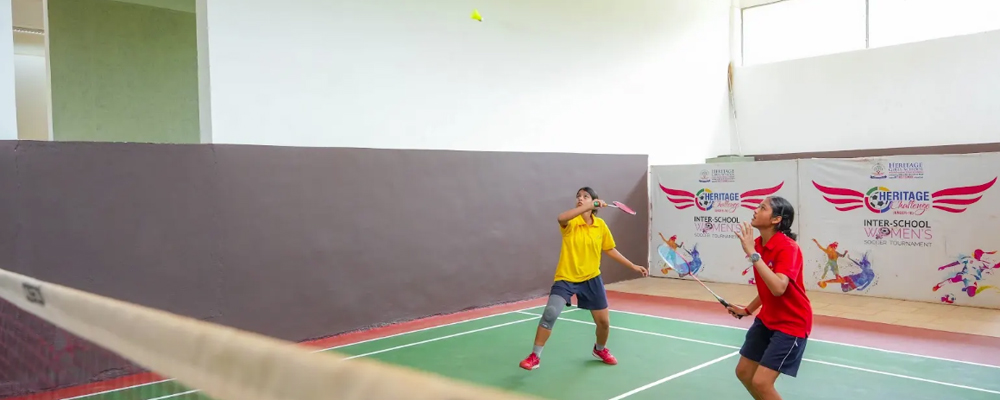
Can physical activity help students become better learners?
The relationship between movement and academic learning is more complex than simply exercising more and automatically achieving higher marks. Nevertheless, evidence suggests that physical activity can support several cognitive functions associated with learning.
Exercise increases blood flow throughout the body, including the brain, and may support processes involved in attention, memory and executive function. Executive function refers to mental abilities such as planning, controlling impulses, switching between tasks and holding information in mind.
These abilities are important in everyday school life. Students use them when following instructions, organising revision schedules, solving mathematical problems and deciding which task to complete first.
Sports also create situations in which students must think quickly and adapt to changing circumstances.
During a basketball match, for example, a player needs to observe teammates, anticipate an opponent’s movement, judge distances and decide whether to pass, shoot or reposition. The decision must often be made within seconds. In chess, players must anticipate possible responses and adjust strategies, while activities such as dance require participants to remember sequences and coordinate movements with music.
Each activity places different demands on attention and thinking.
Physical activity can also provide a useful mental break. After concentrating on a challenging lesson for an extended period, students may benefit from a short period of movement before returning to their work. Such breaks should complement effective teaching and study habits rather than replace them.
Importantly, the relationship works best when schools recognise physical education as part of learning rather than an interruption to it. Students need opportunities to develop their minds and bodies together, without assuming that every sporting activity will produce an immediate improvement in examination results.
4. Developing Discipline, Consistency and Time Management
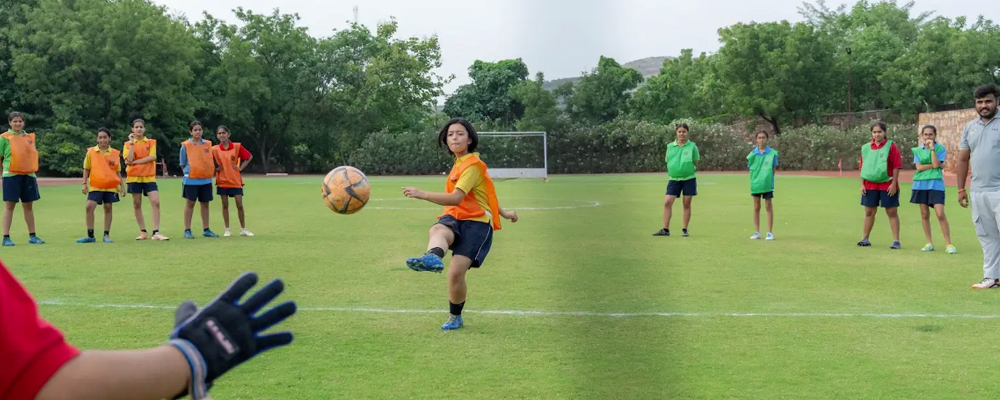
Progress in sport rarely happens overnight. A student learning to swim, improve a tennis serve or run a longer distance must practise repeatedly, pay attention to feedback and accept that improvement takes time.
This process helps make discipline a practical experience rather than an abstract concept.
Students learn that preparation matters. Arriving for practice on time, remembering equipment, following instructions and completing warm-up exercises all contribute to a productive session. They also discover that skipping practice or ignoring technique can make progress more difficult.
These habits can influence other areas of life. A student who learns to prepare consistently for a sporting event may begin to recognise the value of preparing regularly for examinations or completing assignments before deadlines.
Time management becomes particularly important when students balance academics, sport, rest and other interests. They may need to plan their evenings carefully, complete homework before training or organise revision around an upcoming competition.
In a residential school setting, structured daily routines can offer students opportunities to practise these skills while learning to manage their responsibilities with increasing independence.
However, discipline should not be confused with relentless pressure. Students need adequate sleep, nutrition, recovery and time for recreation. Overloading a young person with training and academic commitments can undermine the very benefits that sport is meant to provide.
The objective is to help students understand how consistent effort contributes to progress while also recognising when rest, flexibility and asking for help are necessary.
5. Teaching Teamwork, Communication and Cooperation
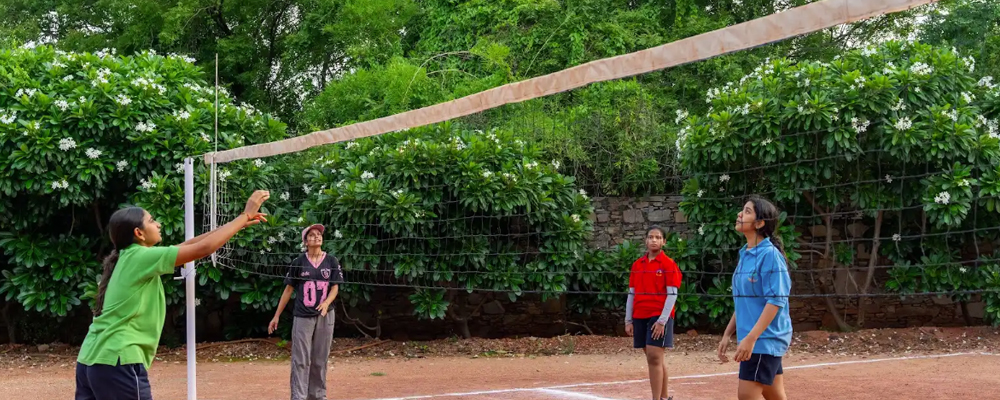
There are very few experiences that demonstrate the importance of cooperation as effectively as a team sport.
In football, a player cannot control the entire match independently. In volleyball, a successful attack depends on coordinated movement and accurate communication. In a relay race, each runner’s contribution affects the team’s overall performance and result.
These situations teach students that individual ability is valuable, but collaboration often determines what a group can achieve.
Effective teamwork involves more than following instructions. Students must listen to one another, share information, recognise different strengths and adjust their behaviour to meet a common objective.
Imagine a school basketball team preparing for an inter-house competition. One student may be particularly skilled at shooting, another may defend effectively, while a third may be good at identifying passing opportunities. The team performs best when these abilities complement one another rather than when every player tries to be the centre of attention.
Team sports also reveal the importance of communication under pressure. Students learn to give clear instructions, acknowledge mistakes and discuss disagreements without allowing frustration to disrupt the entire group.
These lessons transfer naturally to classroom activities, where students must divide responsibilities, combine ideas and work towards shared deadlines.
Even individual sports can strengthen social skills. Swimmers, runners, gymnasts and tennis players often train alongside others, learn from coaches and encourage peers who are working towards their own goals.
Not every student will enjoy the same degree of social interaction, and that is perfectly acceptable. The aim is to provide varied opportunities for connection so that students can develop communication skills in ways that suit their personalities and comfort levels.
6. Building Confidence, Self-Esteem and Independence
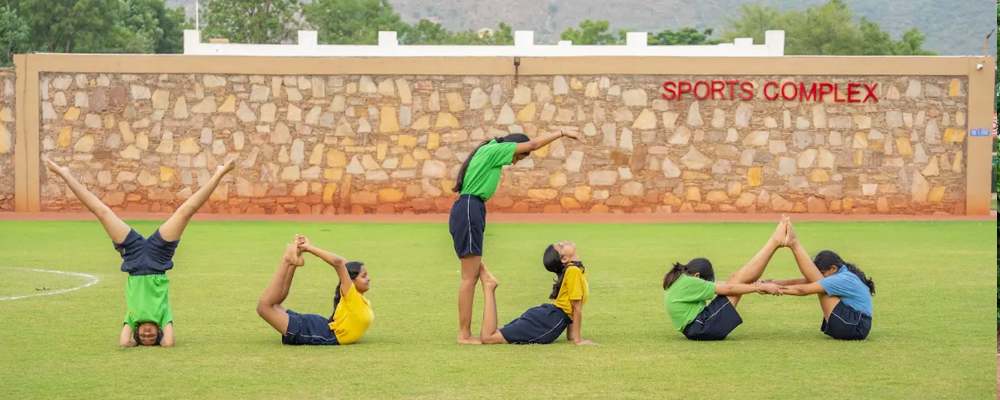
Confidence often develops through experience rather than encouragement alone. Students become more willing to attempt unfamiliar challenges when they have opportunities to practise, make mistakes and recognise their progress.
Sports offer a clear setting for this process because improvement can often be observed over time.
A student who is uncertain about participating in a race might begin by completing a short distance. With practice, they may build enough stamina to finish a longer one. Another student who struggles to catch a ball may gradually develop better coordination through repeated attempts.
Neither student needs to win a competition for the experience to be meaningful. The achievement lies in overcoming a personal challenge.
These small milestones can change how students view their abilities. Instead of thinking, “I cannot do this”, they may begin to think, “I cannot do this yet”.
This shift encourages a growth mindset: the understanding that abilities can improve through effort, effective strategies, feedback and practice.
Sports can also promote independence. Students may learn to set realistic goals, monitor their progress, identify areas for improvement and make decisions about their preparation. As they become more experienced, they can take greater responsibility for their development.
However, confidence should not depend entirely on winning medals, earning selection or outperforming others. Students who do not excel competitively still deserve recognition for effort, improvement, participation and sportsmanship.
When schools value personal progress alongside achievement, physical activity can become an environment in which more students feel capable, included and willing to try something new.
7. Encouraging Leadership and Decision-Making
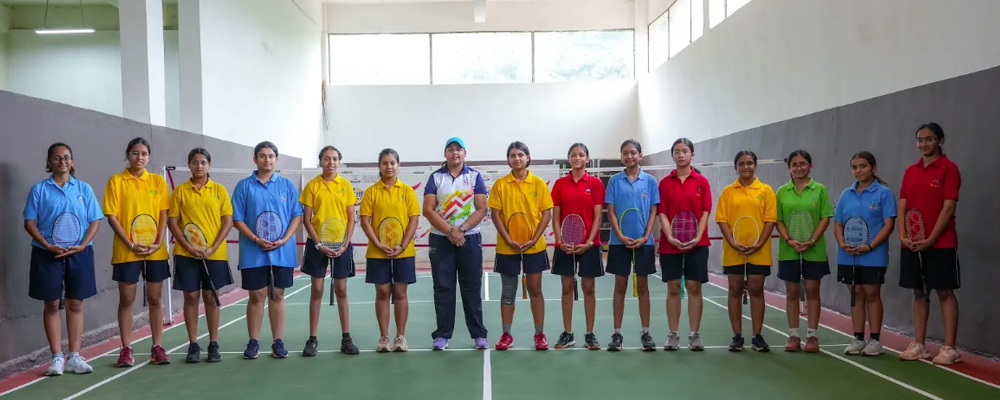
Leadership is often associated with captains, team representatives or students who naturally speak with confidence. In reality, leadership can take many forms, and sports provide opportunities for students to discover them.
A team captain may need to motivate teammates after a difficult first half, communicate a coach’s instructions or help resolve a disagreement. Another student may demonstrate leadership by encouraging another nervous participant, taking responsibility for equipment post practice or by helping a new team member understand the rules.
These experiences show that leadership is not simply about authority. It involves responsibility, awareness of others and the ability to make thoughtful decisions.
Sports also require students to evaluate situations and respond to changing circumstances. A team may need to alter its strategy when an opponent changes formation. A runner must judge how to distribute energy during a race. A climber must assess a route carefully before proceeding under appropriate supervision.
Such situations encourage students to think about consequences rather than act entirely on impulse.
They also demonstrate that good decisions sometimes involve accepting advice, acknowledging uncertainty or allowing someone else to take the lead.
School tournaments, inter-house matches and group fitness challenges can create opportunities for students to organise activities, coordinate with peers and take responsibility for shared outcomes. The same skills can prove useful when managing school projects, participating in student committees or eventually entering the workplace.
Leadership developed through sport is not automatic, of course. Students benefit most when adults provide guidance, encourage reflection and allow them to take age-appropriate responsibility.
8. Teaching Resilience and How to Handle Failure
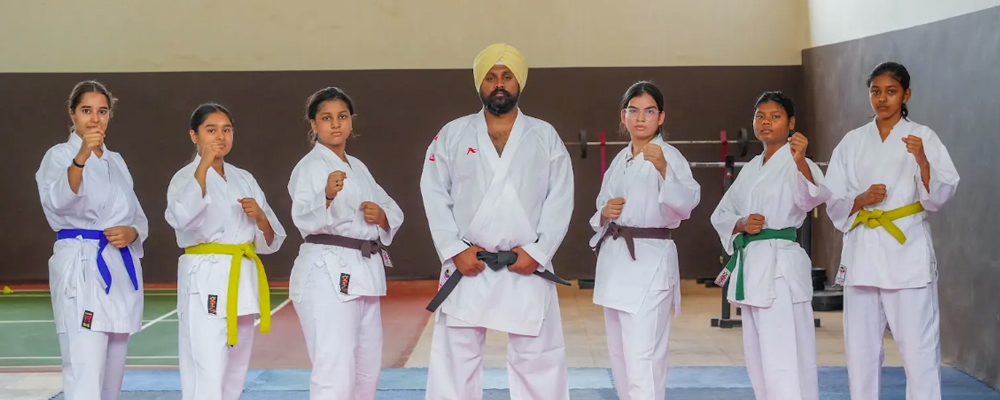
Failure is an inevitable part of both sport and life. A team loses a match, a runner finishes behind their target or a student spends weeks practising a skill without mastering it.
Although these moments can be uncomfortable, they can also become valuable learning experiences.
Sport offers a setting in which setbacks are often immediate and visible. Students cannot always change the result of a match, but they can examine their performance, identify areas for improvement and prepare differently next time.
For example, a student who loses a badminton match may realise that poor positioning created unnecessary errors. Rather than interpreting the loss as proof that they lack ability, they can use the experience to focus on footwork and anticipation during future practice.
This is an important distinction: resilience is not about ignoring disappointment or pretending that failure does not matter. It involves acknowledging difficult experiences, learning from them and continuing when it is appropriate to do so.
Students also learn that success is rarely linear. Progress may be rapid at first, slow later and occasionally interrupted by injury, illness or other circumstances. Understanding this can help them develop patience and realistic expectations.
The lessons extend beyond sport. Academic setbacks, disagreements with friends and unfamiliar responsibilities can all require students to adapt and try again.
Nevertheless, the environment matters. If mistakes are met with humiliation, excessive criticism or fear of losing one’s place in a team, students may become reluctant to participate. Constructive coaching helps them understand that errors are part of learning, while personal dignity and safety remain essential.
9. Promoting Empathy, Respect and Fair Play
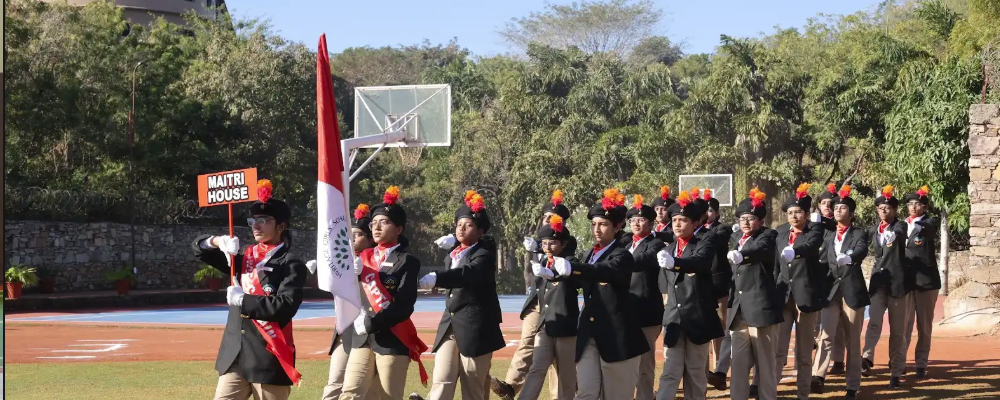
Sport brings together people with different abilities, personalities, backgrounds and levels of experience. When managed thoughtfully, this creates opportunities for students to understand perspectives beyond their own.
Fair play is one of the clearest expressions of this learning. Students are expected to follow rules, respect referees, recognise opponents and accept decisions even when they disagree with the outcome.
These expectations encourage them to understand that competition does not remove the need for respect.
Consider a player who notices that an opponent has fallen during a match. Choosing to show concern, rather than focusing exclusively on the opportunity to gain an advantage, demonstrates an understanding that another person’s well-being matters.
Similarly, students who congratulate opponents after a close contest learn that recognising someone else’s achievement does not diminish their own.
Sports can also provide opportunities to challenge stereotypes. Girls participating in football, cricket, athletics or weight training can develop confidence in their physical abilities, while all students can learn to appreciate different forms of strength, skill and contribution.
Schools must actively support this inclusion. Students should not be excluded or ridiculed because they are beginners, have disabilities, possess different body types or prefer activities that are less competitive.
When participation is accessible and respectful, sport can help students practise fairness, empathy and accountability in situations that feel real and immediate.
10. Supporting Creativity and Problem-Solving
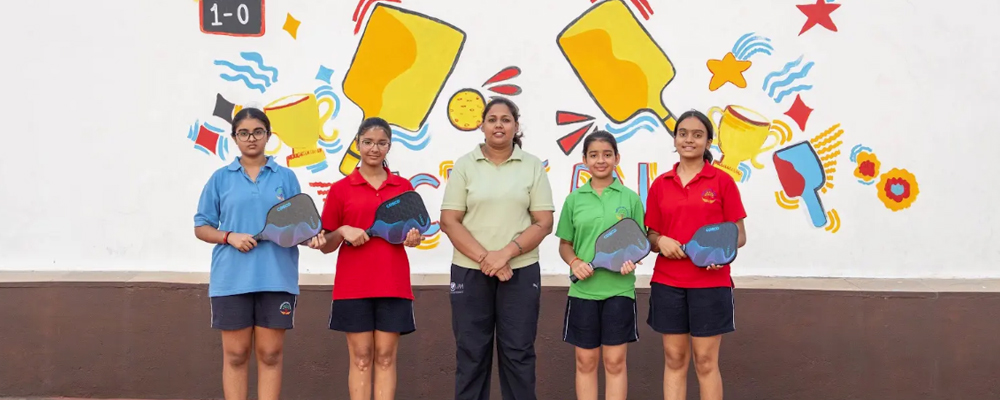
Creativity is not limited to painting, music or writing. It also involves noticing possibilities, experimenting with different approaches and responding imaginatively to challenges.
Many sports require precisely these abilities.
A footballer may need to find an unexpected passing angle. A basketball player might create space through a change of direction. A gymnast or dancer may explore how timing, balance and movement can be combined to achieve a particular effect.
These decisions involve observation, experimentation and adaptation.
Outdoor activities can offer similar opportunities. Students participating in orienteering, for example, may need to interpret a map, compare routes and decide how to reach a destination safely. Group challenges can require them to distribute resources, test ideas and modify their plans when the first attempt fails.
Such activities encourage flexible thinking because there is not always one obvious solution.
They also teach students to balance creativity with judgement. An unusual strategy may be exciting, but it must still account for rules, safety and the abilities of the people involved.
These experiences can complement classroom learning, particularly in subjects that require investigation, practical reasoning or collaborative projects. Students begin to recognise that solving problems involves asking questions, testing assumptions and learning from outcomes.
The broader lesson is that movement can be a setting for intellectual exploration, not merely a break from it.
Conclusion: Developing More Than Physical Strength
Sports and physical activities contribute to holistic development because they bring together many of the experiences that help students grow. They strengthen the body, create opportunities for cognitive engagement, support emotional well-being and teach practical lessons about cooperation, discipline, leadership and resilience.
A student who learns to persevere through a difficult training session is developing more than stamina. A teammate who encourages another after a disappointing result is practising empathy. A young athlete who accepts responsibility for a mistake is learning accountability. These experiences can gradually shape how students approach challenges both inside and outside school.
Yet, the value of sport should not be measured solely by competitive success or academic outcomes. Not every student will win a medal, represent a school team or develop a lifelong passion for athletics. Every student should, however, have opportunities to move, explore, participate and experience the benefits of an active life.
For educators, this means treating physical activity as an important part of education rather than an optional addition to academic learning. For parents, it means encouraging healthy habits without placing unnecessary pressure on performance. For students, it means discovering that growth can happen in many forms, including a personal best, a new friendship or the confidence to try again after a setback.
Ultimately, holistic education is about preparing students not only to succeed in examinations, but also to navigate relationships, manage responsibilities, make thoughtful decisions and look after their well-being.
Sports cannot teach every life lesson on their own, but when supported by thoughtful coaching, inclusive opportunities and a balanced school environment, they can provide a powerful setting in which students learn, grow and discover what they are capable of becoming.